Ecclesiastical self-examination

Ecclesiastical self-examination

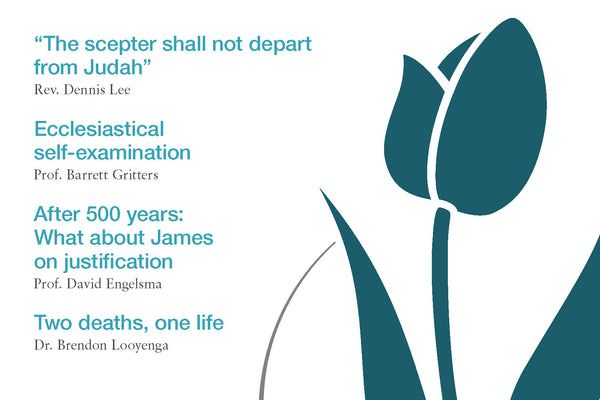
In love for our denomination, therefore, this editorial begins to have us consider: “Are we asking all the right questions as we examine ourselves? What other questions could consistories and church visitors consider? As we ask these questions, are we doing so in keen consciousness of our calling in the Reformation principle Semper Reformanda? Being Reformed, are we in need of any further re-form? Are there other ways that our churches can examine themselves in the light of the Word of God, willing to be re-formed by that Word of God if necessary? And, is there any way to examine ourselves denomination-wide?”

The difficulties of such a careful and thorough ecclesiastical self-examination must not deter us from seeing the importance of the exercise.

A church must do more than pay lip-service to the motto, Reformed and always being reformed. Lip-service to the motto is praising it in special issues of the church magazine, but not acting upon it, improving ourselves year by year. Lip-service is explaining the motto over against other churches who do not embrace its principle or others who misuse it by always seeking change—for change’s sake—but then misuse the motto ourselves by not asking where we need reform.
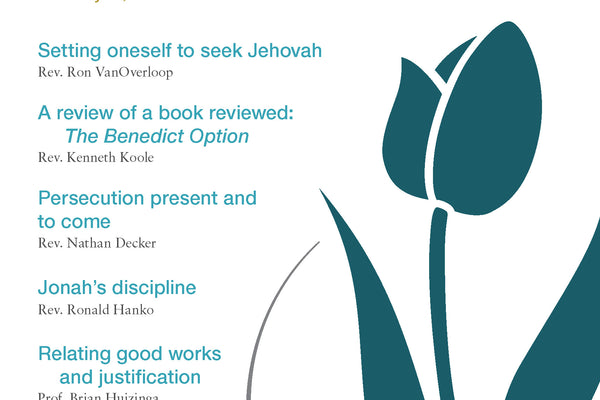
February 15, 2021 Standard Bearer preview article

February 15, 2021 Standard Bearer preview article

We see in Jonah clear proof that though Christ has taken the wrath of God against our sins on Himself and delivered us from the wrath to come, Christ’s work does not deliver us from the consequences of our sins, from divine chastisement, and from God’s holy anger against sin. That is what we forget when we think we can go on carelessly in our sin as though God does not see. That is how we behave when we use grace as an excuse for sin. Then we say with Jonah, “I am an Hebrew and fear the God who made all things,” and refuse to bow before Him.
Two Books on the Awesome Mystery of Marriage

Two Books on the Awesome Mystery of Marriage

Better to Marry provides straightforward, practical instruction for single and married believers alike, taken directly from the classic Bible passages on sex and marriage. Two appendices treat the remarriage and prohibition of the remarriage of the "innocent party."

Marriage…is a Reformed pastor’s instruction and exhortation to married couples, especially young married couples, with the purpose that they glorify God in their marriages and enjoy the bliss of this blessed communion of life.

Order

Order

The church today, guided by Scripture in worship and life, pays attention to good order. We have an order of worship which prevents the unexpected, the chaotic, and the inappropriate. We have a Church Order which spells out practically every aspect of congregational and denominational life. At our meetings we have agendas, and only a motion “to depart from the order of the day” allows us to proceed differently. Scripture calls us to withdraw ourselves from every brother that walks disorderly (II Thess. 3:6-11). A life of confusion is equated with every evil work (James 3:16).

The Deposition of an Office-Bearer

The Deposition of an Office-Bearer

The officebearers, and especially the ministers, al­so promise that they will be always ready and will­ing to submit to an examination, or to the require­ment of a further explanation respecting any partic­ular article of the confessions above named. Such a requirement can be made upon the officebearer “upon sufficient grounds of suspicion and to preserve the un­iformity and purity of doctrine.” And if the office­bearer, minister, elder, or deacon, should ever refuse to submit to such an examination upon the grounds of suspicion, he would by that very act (de facto) be suspended from his office.

Of course, he may appeal to the broader gathering. But in the meantime he will remain suspended.

This, therefore, is another way in which a minis­ter, elder, or deacon may be suspended from his office.

And it is a very important way, because it con­cerns purely the matter of doctrine.

Remembering the Schism of 1953: Schism It Was

Remembering the Schism of 1953: Schism It Was

Ours is a time when every discontented church member feels free to stir up the congregation against the consistory, or leave. Ours is a time when any minister who does not get his way in the church and can hoodwink enough members to support him divides the congregation and abandons the denomination. Ours is a time when groups of disaffected members, who dislike some decision or other, or who probably have lost control of synod, strike out on their own, to form a new denomination.