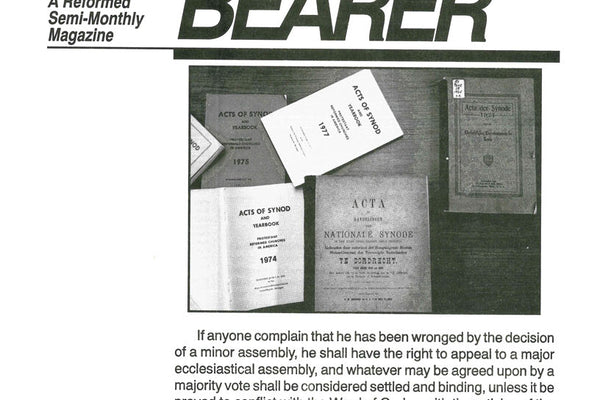
The Binding Decisions of a Reformed Synod

The Binding Decisions of a Reformed Synod

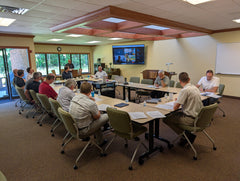
It cannot be said that Protestant Reformed people are wrapped up in the annual meeting of synod. Unless there is a case of special interest to the churches, visitors at synod are few. Seldom is the church building packed at the worship service with which synod begins. It is doubtful that the members wait with bated breath for the decisions of synod in the Acts.

Nevertheless, it lives in the congregations that synod is an important part of our church life. There is understanding that synod settles matters of dispute in the churches. The churches carry out the decisions of synod that bear on the denominational life. Consistories and individuals submit to decisions of synod with which they themselves are in disagreement. It is accepted that synod’s decisions will be considered settled and binding by all the consistories and by all the members.

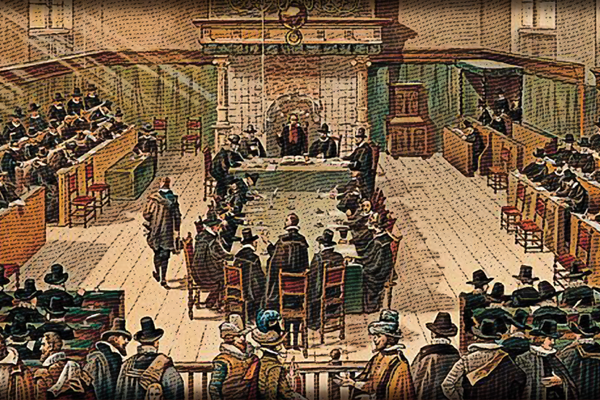
This is as it should be. This is healthy. This is Reformed. The broader assembly of the churches, synod now in particular, is the necessary expression of the unity of the church of Christ. In keeping with the purpose of the unity of the church, synod serves for the mutual help of the congregations and represents the cooperative labor of all the churches of the denomination on behalf of Christ their common Head.
February 1, 2021 Standard Bearer preview article

February 1, 2021 Standard Bearer preview article

Watchman on the Walls of Zion: The Life and Influence of Simon vanVelzen, by Rev. Joshua Engelsma. Jenison, MI: Reformed Free Publishing Association, 2021. 224 pages. $26.50, hardcover. [Reviewed by Rev. Stephen Regnerus]

Simon vanVelzen. Who is the man? Many readers likely are unfamiliar with him, for the name Simon vanVelzen is not a household name. And if we should know the man, then how are we to view him? Many historians consider him to be an imbalanced, even radical man, while few hold him up as a wise and balanced warrior. What ought our assessment to be? Was vanVelzen a courageous servant who is to be commended for his unbending defense of the truth, or was he a stubborn fellow who is to be criticized for continually arguing and refusing to heed advice from those around him?

Face

The original words for face, both in the Hebrew and in the Greek, show the same derivation: first, to turn towards, to face; then, the part that turns, the face or appearance; then, one’s presence; and, finally, one’s person itself. The word countenance is closely related to the idea of face, presence, and person.

The face reveals what is in the heart of a man (and of God); it shows the attitude of someone, the stance he has toward another. The face can show humility. Abram fell on his face before God when God spoke covenant promises to him (Gen. 17:3), and Joshua fell on his face before the Captain of the Lord’s hosts (Josh. 5:14). But Jesus warns us that there is a false disfiguring of the face, a wearing of a sad countenance, that God sees and detests (Matt. 6:16). The face can show resolution. When it was time for Jesus to be received up, “He stedfastly set his face to go to Jerusalem” (Luke 9:15). God reveals His anger and displeasure by hiding His face (Ps. 13:1), and by setting His face against a man (Ps. 34:16). Man’s face can show opposition to God’s word, for the prophet Jeremiah was told by God repeatedly not to be “afraid of their faces, for I am with thee” (Jer. 1:8).

Reformed Church Order: Law of Christ

Reformed Church Order: Law of Christ

The life and labor of the Protestant Reformed Churches are regulated by a church order. This is the church order adopted for Reformed churches by the Synod of Dordt, 1618-19.

The church order is law for the churches. It is the authoritative standard to which both consistories and church members must conform. There are sanctions for the unruly and disobedient. The member who handles sin in the congregation by broadcasting it from the housetop, or over the telephone, rather than following the way prescribed in Articles 71-74 of the church order, will himself be disciplined. The minister who publicly agitates against the decision of his consistory will be censured for schism. The elder who is “captious and . . . vehement in speaking” at classis will be silenced and, if need require, disciplined by the president of the assembly. The consistory that refuses to submit to a decision of synod will be set outside the union of the churches of Christ.

Watchman on the Walls of Zion: The Life and Influenece of Simon van Velzen

Watchman on the Walls of Zion: The Life and Influenece of Simon van Velzen

Simon van Velzen was a powerful preacher of the gospel. He was a reformer of the church of Christ in the Netherlands in the Secession of 1834, a seminary    professor who influenced hundreds of future Reformed ministers, as well as a faithful husband and devoted father.

Sadly, many Reformed Christians in the twenty-first century have little, if any, idea as to who he is. Where he is remembered, he is often branded as being “unyielding, obstinate, and domineering,” and he is dismissed as being of little significance in the history of the church.

Here’s the biography that corrects the ignorance and misconceptions by setting forth the fascinating life of an influential figure in the history of Christ’s church.

January 15, 2021 Standard Bearer preview article

January 15, 2021 Standard Bearer preview article

Lessons from the Judges (2): From 32,000 to 300

The book of Judges brims with instruction for the church’s youth. Last time, we noticed the idea, “…every man did that which was right in his own eyes” (Judges 17:6). With this article, we continue drawing lessons from the book of Judges.

We find ourselves in the history of Gideon, following the deaths of judges Shamgar, Deborah, and Barak. Israel had again apostatized. As was repeatedly the case, God’s people slid into the sin of idolatry. Jehovah, in chastisement, sent the Midianites, Amalekites, and children of the East to oppress Israel. It is in this context that God called and equipped Gideon as judge. The Midianites and their allies gathered to fight against Israel. Gideon and certain of Israel—much fewer in number than their opponent—also assembled for battle. Although Israel’s army was small to begin with, Jehovah reduced its size even more before delivering the Midianites into Gideon’s hand. We will draw out two main lessons from this size reduction.