Grace

Grace

Simply amazing, grace is. More glorious than the sun (Ps. 36:9), but few can see it (John 9:39). Exceedingly precious, but free (Eph. 2:7; Rom. 5:15). A gift; you cannot buy it (Rom. 5:15; Acts 8:20). More valuable than gold, but unwanted until received (Prov. 22:1John 4:10). If you work for grace, you cannot have it; but without grace, you cannot work (Rom. 11:6; 2 Cor. 9:8). Most abundant, yet uncommon (2 Cor. 4:15Ex. 33:19). Gentle, yet irresistible (Acts. 4:33). It makes the dead alive, the weak strong, the blind see, the ugly beautiful, and the humble glorious.

"It will not only help your children...it will also challenge you in your own marriage"

"It will not only help your children...it will also challenge you in your own marriage"

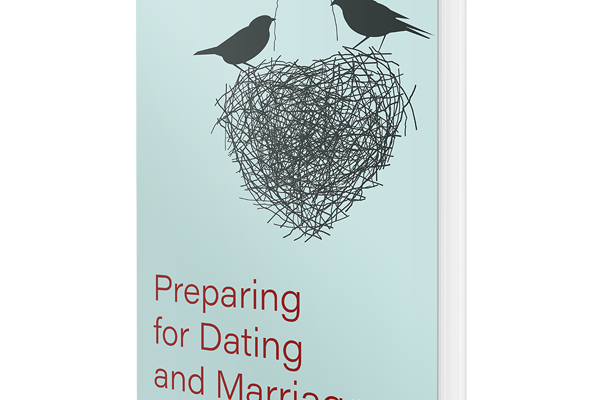
Preparing for Dating and Marriage by Cory Griess. Reviewed by Dr. Sacha Walicord, pastor of Walker United Reformed Church, Grand Rapids, Michigan, visiting Professor Akademie fuer Reformatorische Theologie (Reformed Theological Seminary), Giessen, Germany.


Many Christian parents have lost countless nights’ sleep over their child’s unwise dating or marriage decisions. Much heartache has been caused by covenant children who entered the “dating game” or even marriage in an unprepared way. Much of this heartache and many tears could have been avoided if parents just had had a tool that helped them teach their children how to look for a godly spouse. Cory Griess’ very readable devotional seeks to fill exactly this gap as it is not only written from a sound biblical perspective but also in a warm and easy-to-understand tone. This is not your classical self-help book, but it is written for an audience 7th grade and up to be used as a family devotional guide in thirty-one brief and straightforward lessons.

Are you interested in owning a copy of the Church Order Commentary by Van Dellen and Monsma?

Are you interested in owning a copy of the Church Order Commentary by Van Dellen and Monsma?

Are you interested in owning a hard copy of the Church Order Commentary by Van Dellen and Monsma? This commentary is authoritative, time-tested, and a very timely source of instruction on the need for biblical consistency in Reformed and Presbyterian church government today.

We currently offer the Church Order Commentary as an ebook but would like to determine if there is enough interest to print hard copies. If we receive enough preorders, we will move forward with the project and print the book.

Our plan is to produce the commentary as a soft-cover book at a retail price between $20 and $25.

November 15, 2020 Standard Bearer preview article

November 15, 2020 Standard Bearer preview article

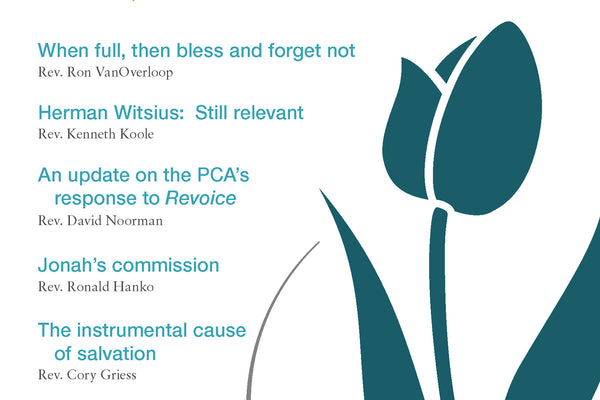
The instrumental cause of our salvation

However, to speak more clearly, we do not mean, that faith itself justifies us, for it is only an instrument with which we embrace Christ our righteousness. But Jesus Christ, imputing to us all His merits and so many holy works which He has done for us and in our stead, is our righteousness. And faith is an instrument that keeps us in communion with Him in all His benefits, which, when become ours, are more than sufficient to acquit us of our sin.

—Belgic Confession, Article 22

Faith, thus receiving and resting on Christ and His righteousness, is the alone instrument of justification; yet is it not alone in the person justified, but is ever accompanied with all other saving graces, and is no dead faith, but worketh by love.

—Westminster Confession of Faith, Chapter 11.2


“Let those roar at us who will”

“Let those roar at us who will”

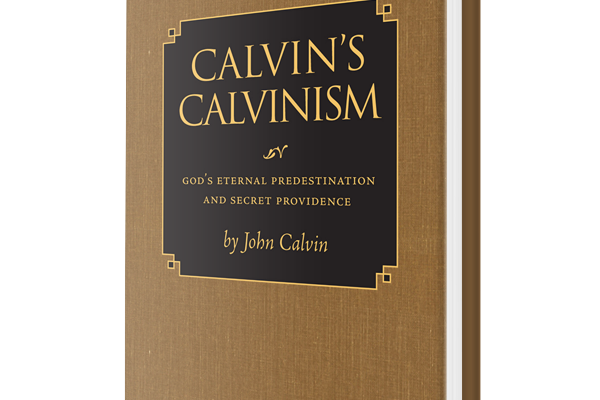
This treatise presents Calvin’s mature thoughts on two important doctrines: predestination and providence. In this second edition from the RFPA these related topics are placed together, the way Calvin himself addressed them in his original.
 
Also included in this edition:

a historical introduction to the treatise by the editor

Calvin's response to a former friend who wrote against the treatise

      “Let those roar at us who will. We will ever brighten forth with all our power of language the doctrine that we hold concerning the free election of God, since it is only by it that the faithful can understand how great that goodness of God is that effectually called them to salvation.”—John Calvin

      Boldness

      Boldness

      In the Old Testament the word “boldness” is found but a few times. The root meaning is a place of refuge; then to take refuge; then to be confident, sure, without care. In the New Testament the word comes from two smaller words having the meaning of “all” and “to flow, to run like water.” Together this compound word has the meaning to be outspoken, frank, even blunt; to be confident in utterance, and bold in spirit and demeanor. Sometimes the King James translates this word as confident.

      The Lord Jesus was always bold in his preaching and teaching. “For he taught them as one having authority, and not as the scribes” (Matt. 7:29). Jesus even said, “I spake openly (boldly) to the world: I ever taught in the synagogue and in the temple, whither the Jews always resort; and in secret have I said nothing” (John 18:20). There were times when Jesus spoke in parables (John 16:25) and did not walk openly or boldly among the Jews (John 11:54) because his hour was not yet come. But Jesus always insisted that he told them openly that he was the Christ, and that the works which he did bore witness of him, even though the Jews complained that he made them doubt because he did not teach plainly, boldly, without ambiguity (John 10:24–25). When Jesus died on the cross, taking our sins out of the way, and spoiling principalities and powers, “He made a shew of them openly, triumphing over them personally” (Col. 2:15). The work of Jesus was not performed in a corner, but openly, publicly, boldly, without any concealment, hesitancy, or ambiguity.