Faith: A Bond, a Gift, and an Activity (2): Faith and Justification

Faith: A Bond, a Gift, and an Activity (2): Faith and Justification

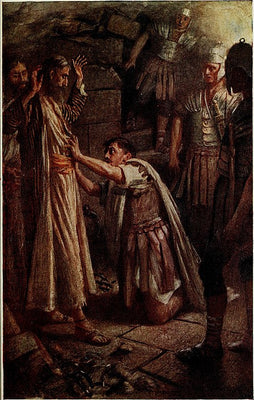
We should understand the jailor’s salvation in this way: Paul addressed the Philippian jailor with the command: “Believe in the Lord Jesus Christ and thou shalt be saved.” Paul did not say, “You are saved already because you are regenerate; therefore, do nothing.” He said, “Believe and thou shalt (in the future) be saved.” In other words, the jailor would enter into the enjoyment of the other benefits of salvation—justification, the forgiveness of sins, and, ultimately, heavenly glory—through faith in Jesus Christ. Without faith in Jesus Christ no man enjoys salvation, not even this panicking jailor. It is possible to possess salvation (to be regenerate, for example) without conscious faith, but it is not possible to possess the other benefits of salvation such as justification and sanctification, and to be consciously aware of them, and thus to enjoy and experience them, without faith (Rom. 5:1; I Pet. 1:22; Acts 26:18).

Faith: A Bond, a Gift, and an Activity (1)

Faith: A Bond, a Gift, and an Activity (1)

What follows is from Martyn McGeown's article "Faith: A Bond, a Gift, and an Activity,...

Considerations on Acts 16:30-31

Considerations on Acts 16:30-31

What follows is a short email exchange between David J. Engelsma and David Hutchings, a friend...

The Goodness of God’s Nearness

The Goodness of God’s Nearness

With God as his refuge, the psalmist lets the storms do their profitable work upon him. The troubles work his glory. With God as his refuge, the psalmist will not again stumble and nearly fall, regardless of the severity of the storm in his own life and regardless of the seeming tranquillity of the ungodly. God is the “rock of my heart” (v. 26).
The Reformed Harmony of Paul and James

The Reformed Harmony of Paul and James

James’ doctrine is that the faith that justifies by itself alone also always works, for justifying faith is not a “dead faith,” which is no faith at all, but a living faith. True, living, justifying faith is union with Christ, and union with Christ does and must bear fruit in good works of obedience to the law of God. Doing justice to James’ terminology, James teaches that, regarding its clear and powerful demonstration, justification is by works. Paul, in contrast, teaches that, regarding the means by which the sinner is declared righteous by God the judge, justification is by faith, and by faith only.

Passive Faith?

Passive Faith?

We do not, of course, bring our works into our justification, but the faith by which we are justified is not passive. It is not a dead faith, but a living, active faith. It is not a working faith, for faith does not work, least of all for justification, but it is (to risk stating a redundancy) a believing faith, a faith that receives, embraces, appropriates, etc. That living, active faith is the God-worked, graciously-given instrument by which we embrace Jesus Christ and all his benefits, and the means by which God graciously imputes to us the perfect righteousness of Christ. It does not belong to our righteousness before God, and, therefore, it is not the ground/basis of our justification, but it is the instrument by which we lay hold of the righteousness of our Savior. It is not a passive instrument, for how could faith, “the hand and mouth of our soul” (Belgic Confession, Article 35) be passive, inert, inactive?