Preaching Repentance and Forgiveness (7): Repentance and Remission

Preaching Repentance and Forgiveness (7): Repentance and Remission

Two concepts are included and, clearly there is a relationship between them. Quite simply, God forgives the sins of those who repent, or God forgives sinners when they repent. “I acknowledged my sin unto thee, and mine iniquity have I not hid. I said, I will confess my transgressions unto the LORD; and thou forgavest the iniquity of my sin” (Ps. 32:5). “Let the wicked forsake his way, and the unrighteous man his thoughts: and let him return unto the Lord, and he will have mercy on him, and to our God, and he will abundantly pardon” (Isa. 55:7). “I send thee, to open their eyes, and to turn them from darkness to light, and from the power of Satan unto God, that they may receive forgiveness of sins, and inheritance among them which are sanctified by faith that is in me” (Acts 26:17b-18). That should be enough—God forgives us when we repent—but to dispel confusion, we should explain the relationship further. 
Preaching Repentance and Forgiveness (6): Justification by Faith Alone

Preaching Repentance and Forgiveness (6): Justification by Faith Alone

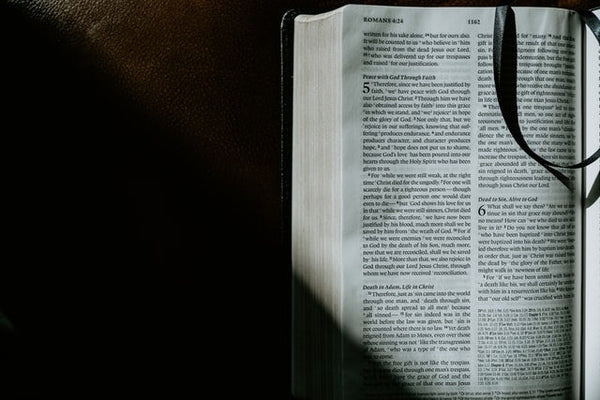
How, then, do we become partakers of Christ’s perfect righteousness so that it becomes ours? God imputes it to us or he reckons it to our account by faith. The instrument or means of justification is faith, not works. Faith is the only appropriating instrument: we are not justified by working, or by repenting, but by believing.
The Biblical Concept of Grace

The Biblical Concept of Grace

To arrive at an accurate conception of the operation of the will of God, we cannot proceed from the meaning of the word grace in our everyday usage of the term, nor even from its usage in Holy Scripture. We must study specific terms and the use of words, but it must be done with great care. We always run into the danger of arguing from something in man to what is in God. That is the re- verse order. We must work theologically. God Himself determines the character of His will, grace, love, hate, wrath, and so forth. But it is also true that we know nothing definite about God apart from God’s revelation in Scripture. And so we must have a clearly defined idea of God and the operation of His will, which we get from God’s self-revelation, before we say anything at all. Such submission to the same Word of God’s revelation must also be present when we consider election by His grace, and the accompanying reprobation of His wrath, because both are the operation of His eternal will.
Preaching Repentance and Forgiveness (5): Forgiveness and Justification Distinguished

Preaching Repentance and Forgiveness (5): Forgiveness and Justification Distinguished

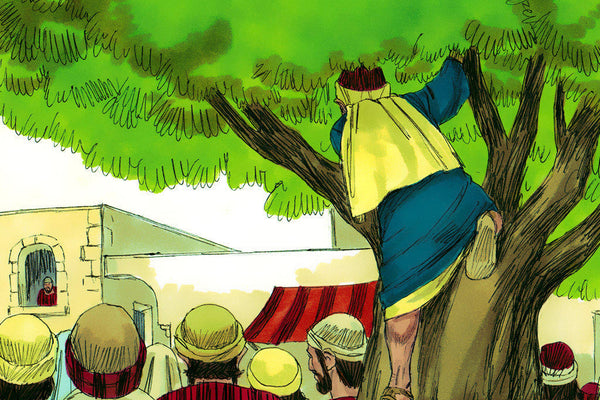
One of the problems with an emphasis upon eternal justification is that justification by faith becomes simply a realization that we were always justified, not an actual point in time when our legal status changed and we were declared righteous. This leads to the extreme view that we were always saved, never lost, which would be news to a man like Zacchaeus: “This day is salvation come to this house, forsomuch as he also is a son of Abraham: for the Son of man is come to seek and save that which was lost” (Luke 19:9-10).
Preaching Repentance and Forgiveness (4): Forgiveness of Sins

Preaching Repentance and Forgiveness (4): Forgiveness of Sins

In the minds of some, forgiveness of sins is the same thing as justification by faith alone and, since we are justified by faith alone without works (and the same people often define repentance as a work), to connect the forgiveness of sins in any way with repentance jeopardizes the truth of justification by faith alone. Therefore, with due deference to the fundamental truth of justification by faith alone we proceed carefully.

Preaching Repentance and Forgiveness (3): Classifying Repentance (b)

Preaching Repentance and Forgiveness (3): Classifying Repentance (b)

Repentance is not faith and faith is not repentance. Faith is knowledge, confidence, trust, and assurance. Repentance is a change of mind. Nevertheless, faith and repentance are inseparably connected. Since we believe in Christ for salvation from sin, we necessarily repent of our sins at the same time. We cannot look to Christ in faith for salvation from sin while we hold to our sins. If we have true faith, we change our mind concerning our sins. Thus repentance and faith are two sides of the same coin: by faith we look to Christ and by repentance we look away from sin. Thus Paul summarizes his preaching in Ephesus in Acts 20:21: “Testifying both to the Jews and the Greeks repentance toward God and faith toward our Lord Jesus Christ.”