March 1 Standard Bearer preview article

A man of character

For a young man to be what God calls him to be, he must be a man of high character.

The mention of character sounds strange to the modern ear. It makes us think of some long-forgotten, more formal era. The worldly man is not concerned with character, and the examples of men in the media today are the farthest thing from men of character.

This makes it all the more urgent that the Christian young man be a man of character. The character about which he is so concerned is a set of spiritual attributes graciously given him by God. Having received them from God, the man of God then carefully cultivates and diligently develops them in his life.

There is certainly more that could be said, but here I want to mention three aspects of a godly man’s character: sobriety, wisdom, and compassion.

Continue reading...

A Bitter Cry of Unbelief

A Bitter Cry of Unbelief

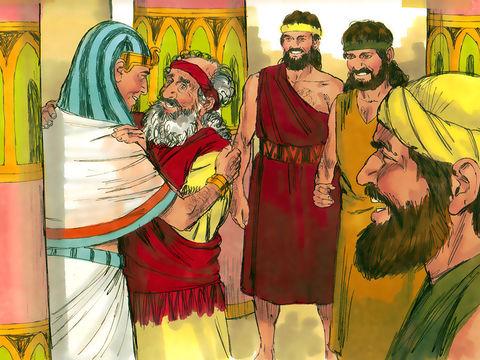
With heavy hearts, because they had to leave Simeon behind in one of Egypt's prisons, the nine brothers of Joseph mounted their beasts of burden. And yet with a sigh of relief they headed northward for the land of Canaan. How wonderful to be out of prison and away from rough speech! 

The relief, however, was soon replaced with increasing anxiety, so that their hearts became heavier each step that they took homeward. For now a new trying situation began to impress itself upon their consciousness. They must face their father and explain to him Simeon's absence, the fact that they found a sack's worth of money in the sack of grain that they had opened, and that they must take Benjamin along, if they are to return and get food again out of Egypt. What troubled them especially was the fact that they had to persuade their father, who now looked upon Benjamin as his most beloved son, to let them take this youngest son along on their next trip. 

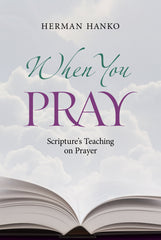
I Love the Lord!

“I love the Lord, because He hath heard my voice and my supplication.” Psalm 116:1

I love the Lord! That is the theme of the whole psalm. He will give us the reason for his love; he will tell us what he is going to do with that love, so that he ends in heaven itself where he will dwell in the courts of the Lord forevermore, but you are right when you write above the whole psalm: I love the Lord!

What mighty concept: I love the Lord!

Yes, the world also speaks of love.

Very learned men, especially in the field of psychology, tell us that love is the deepest urge in man, moving him irresistibly on. They say that behind all effort of men of all the ages you will find the love of man for his mate, his friend, his flesh and bone, his fatherland, humanity. And I can well believe it. Read the literature of all the ages, and you will come face to face at every page with the love of man.

But their love is not our love. Our love is the love of God! Therein lies all the difference in the world!


Letter to Timothy

Letter to Timothy

Dear Timothy,

In the last letter to you I mentioned, somewhat in passing, that our attitude towards the preacher and our attitude towards the preaching were inseparably related to each other. I want to say a bit more about that in this letter, especially from the viewpoint of what is involved in listening to a sermon. I wonder sometimes whether we have lost the art of listening. Or, if I may repeat that passage from Ecclesiastes which I quoted last time, "Keep thy foot when thou goest to the house of God, and be more ready to hear, than to give the sacrifice of fools: for they consider not that they do evil. Be not rash with thy mouth, and let not thine heart be hasty to utter any thing before God: for God is in heaven, and thou upon earth: therefore let thy words be few." Do we really know how to do this?

Training Elders in History

Training Elders in History

Some elders may have sensed that an important aspect of elders’ qualifications has not been mentioned—that is, intimate knowledge of the people. While knowledge of scripture, church government, and counseling are essential, they will not make a man a good elder if he does not also know the flock. The good shepherd knows his sheep.

A good elder will be like a good doctor. Before he treats his patient, a doctor will get an “H&P”—a history and physical. He will assess my present condition via a thorough physical examination and learn my history by asking me to fill out an extensive questionnaire. The history will be valuable for his treatment of me. Is there heart disease in my family, or glaucoma? Did any of my relatives have cancer? More important than my family’s history is my own—my childhood diseases, past surgeries or injuries. Is there a history of substance abuse or depression? Even my social history may be helpful—am I married, single, or divorced. And every doctor must know my present condition—allergies, medications, tobacco use, etc.—before he is ready to treat me most beneficially. Not knowing these things may expose him to making serious errors of judgment in my treatment.

The Pastoral Character of the Canons

There are, undoubtedly, many reasons why wholesale departure from scripture truth is so characteristic of Reformed churches today, but not least among those reasons is the fact that churches and denominations often forget that they are part of the church of all ages, and that, also with regard to doctrine, they stand in organic connection with the church of the past. If the church is faithful to the truth then she is built on the foundation of apostolic doctrine and prophetic teaching, and by the grace of God that doctrine and that teaching is an inheritance received from the faithful church of years past. It is not only to her disgrace but to her own ruin that the church forgets this. 

For Reformed churches, perhaps more than any others, this heritage of truth is to be found in their creeds. Those creeds or confessions are the fruit of hard study, careful interpretation, and life-long defense of the word of God by those who have gone before, and it is through faithful use of those creeds that we as Reformed Christians “come into” our inheritance. The trouble is that Reformed churches today, almost without exception, are churches without a heritage, not because they have discarded their creeds but because they have neglected them. The creeds are useful and profitable only in so far as they are used in the preaching, the teaching, and in all the work of the church. Through neglect of her creeds, a church cuts herself off from the organism of the church and lays herself open to the withering influence of false teaching and worldliness.