The Church Prayer Meeting

The Church Prayer Meeting

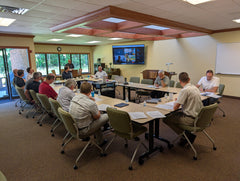
Church prayer meetings are not commonly held in our Protestant Reformed Churches, in fact they are not very common as far as we know in any of the Reformed Churches. They have long been a tradition in Presbyterian Churches as well as a number of other churches. There are those who claim that they were regularly held in the church from the time of the apostles. We have had the opportunity to experience such meetings during our labors as missionaries in the Evangelical Reformed Church of Singapore. These prayer meetings were already an institution in what was then the Gospel Literature and Tract Society (G.L.T.S.) when we came to Singapore. We found these prayer meetings to be a great source of blessing both to the church as a whole and to ourselves personally. It is our purpose in this article to tell you something about these meetings. We want also to consider some of the biblical bases for holding such meetings. Finally, we want to relate some of what we can see to be the great blessings these meetings afford the church. It is our conviction that we as Protestant Reformed Churches can learn from these meetings and that we could well consider holding similar meetings in our own midst.
Ephesians—The Church, One in Christ

The epistle to the Ephesians sets forth the grand theme of the church's unity in Christ. Being one of Paul's writings during his confinement in Rome, it reflects the maturity and spiritual insight of one whom the Holy Spirit had prepared for such a task.

April 15, 2019 Standard Bearer preview article

Having set before us the folly and disorder of affairs in civil life, the Word of God turns to a series of natural or organic connections. The intent is that we should contemplate them, discern the reality of things, and by that reflection point us to the way of wisdom and warn us against folly. We need, therefore, to consider the illustrations in their natural context first.


The Strength of Youth: Asset or Liability?

A word of explanation concerning the title of this article is first in order. All the articles in this section of the Standard Bearer are under the theme "The Strength of Youth," referring to the spiritual strength of the young people in the church of Christ. However, we can also speak of physical strength, referring not only to the body of the young man as he flexes his muscles, but also to the beauty of the young woman, and to one’s keen mind and particular talents and abilities. It is this physical strength of youth that is referred to in the title of this article with the express purpose of addressing the young people with the question, “Does your physical strength stand in the way of your spiritual strength? Is it a stepping stone or a stumbling block? Asset or liability?” Paradoxical as it may sound, it is nevertheless true that often our strength is our weakness. 

The Final Judgment of the Elect

The Final Judgment of the Elect

After that great and notable day of the Lord when Jesus shall appear to gather his elect people from the four winds there will take place one final wonder of grace—the final judgment of this world. Paul speaks of that Judgment in 2 Corinthians 5:10: “For we must all appear before the judgment seat of Christ; that every one may receive the things done in his body, according to that he hath done, whether it be good or bad.” This final wonder stands intimately related to that great resurrection from the dead. With the coming of Christ all that are in the graves shall hear his voice and come forth. They then shall stand before Christ and be judged; they that have done good will be given life and they that have done evil damnation. Just as all shall be raised from the dead, so also all shall stand before the great white throne of Christ and be judged. No one will escape judgment, including the very elect people of God. 

Many today, in opposition to this, are quite surprised and even irritated when this truth is declared. The children of God standing before God and the world and having their sins exposed for all to look upon? God would not put his people through such shame! God’s children standing before a vengeful God who is filled with anger toward the sinner? How frightening! Indeed, that crushes all comfort and hope in the heart of a child of God! That simply is not true, they would contend; the elect will not be judged in the judgment day. Jesus has died upon the cross and shed his blood as a covering for our sin. That sin is, as it were, hidden from God’s eyes and we are no longer held accountable for it. Why then would God require of us to give an account of our sin in the judgment day? In that day we will be presented before all as having no spot or wrinkle or any such thing. To stand before God in judgment would be senseless. 

Continue reading...

April 1 Standard Bearer preview article

Who Am I?

…God, whose I am, and whom I serve.” Acts 27:23b.

“Who am I?” This is the second most important question to ask and answer. Now and throughout all of life, every morning when you awake, every night before you go to sleep, and before every decision you make between waking and sleeping, you should be answering this question of self-identity.1 But before asking ourselves this, we must be aware of the first most important question, which is “Who is God?” Catechism students studying the “Essentials of Reformed Doctrine” will recognize this if they remember the six loci of Reformed doctrine, the first being Theology, which answers this question. Let us be sure to start here. Begin with this question every day, for if you do not first know who God is, you will “mess up” the knowledge of who you are. Only in keeping that crucial knowledge of God’s identity in mind will one rightly answer the second most important question—number two of the six loci (Anthropology)—“Who am I?”