The Marks of the False Church (concluded)

The Marks of the False Church (concluded)

The identifying mark of the false church is that she lacks the marks of the true church, i.e., the pure doctrine of holy scripture, a pure administration of the sacraments; and the exercise of church discipline in the correcting of sin. Rich in the incidentals of size, ecclesiastical reputation, earthly influence, religious ritual and busyness, and pomp (which, alas, fascinate many professing Christians in every age); she is destitute of the essentials of the body of Jesus Christ in the world. 

The Marks of the False Church

The Marks of the False Church

". . .As for the false Church, she ascribes more power and authority to herself and her ordinances than to the Word of God, and will not submit herself to the yoke of Christ. Neither does she administer the sacraments as appointed by Christ in His Word, but adds to and takes from them, as she thinks proper; she relieth more upon men than upon Christ; and persecutes those, who live holily according to the Word of God, and rebuke her for her errors, covetousness, and idolatry. These two Churches are easily known and distinguished from each other."—Belgic Confession, Article 29

The "problem" of the article of our Confession of Faith quoted above is its absolute distinction between the true church and the false church. It does not speak of purer and less pure churches, of manifestations of Jesus' body that vary in degree of faithfulness and doctrinal purity; but of "two Churches," the true and the false.

Moses' Forsaking of Egypt

Moses' Forsaking of Egypt

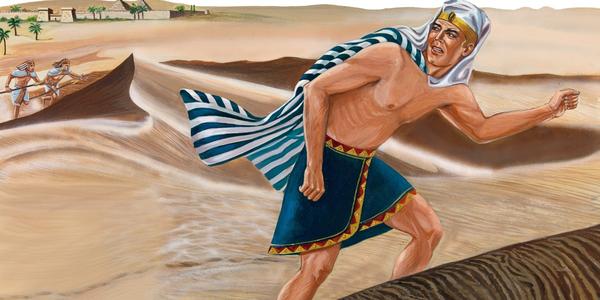
"By faith he forsook Egypt, not fearing the wrath of the king: for he endured, as seeing Him who is invisible." Hebrews 11:27

Choose we must. We must always choose between Christ and Satan, between the service of the Lord and that of the devil, between Egypt and the people of God, between the things above and the things below. And this choice is inevitable. No compromise is possible. It is either God or mammon, Christ or Belial, the church or the world. And to choose for God and Christ is possible only by faith. 

Moreover, once we make the choice we must act. Our conscious choosing and definite action are always inseparable. Faith in Christ and a spiritual walk are inseparably connected. Indeed, to express a preference for God and his cause and then to seek the things below is surely dishonest. How true this is of Moses! That faith and action are inseparably connected will also become plain as we dwell a few moments upon the incident in this particular word of God. Fact is, this is the thrust of this passage. 

The Incident

To which incident does this text refer? Moses left Egypt twice: he left Egypt when he fled to Midian, and he again left Egypt at the exodus. Which incident is meant here? The commentators are not in agreement; there is much to be said in favor of both explanations. 

Continue reading...

March 15 Standard Bearer preview article

How could any Protestant go ‘home’ to Rome?

One year ago, I reported that many Protestants are ready to “cross the Tiber” into Roman Catholicism. The expression “crossing the Tiber” refers to fording the river that runs alongside Rome, symbolic of the barrier between Rome and Protestants. With grief, I had to report that even leaders in our mother church are talking about making the crossing.1 Some church leaders are sending not-so-subtle messages to members: It is permissible, and probably time, to unite with the Catholic Church. One Calvin Seminary faculty member wrote that Protestants and Catholics are “pilgrims on the same journey, serving one Lord with one faith” who “will come nearer to their goal if they walk together than if they walk separately.” If I had not read his words with my own eyes, I would have been disbelieving of such a report.

Our Natural Depravity

Our Natural Depravity

We received the following question: "Is a regenerated person still depraved?

Your question reminds me of two errors that often arise within the church: on the one hand, the error of perfectionism, and on the other hand, the error of antinomism.

The perfectionist argues that we are new creatures in Christ; old things are passed away, and, along with these old things, also our depravity. He appeals to such passages of scripture as I John 3:9: "Whosoever is born of God doth not commit sin; for his seed remaineth in him: and he cannot sin, because he is born of God." The perfectionist will also refer to saints like Job, of whom it is written that he was a man, "perfect and upright, and one who feared God and eschewed evil.” The Pentecostals seem to lean in that direction when they speak of being baptized by the Holy Spirit, enabling them to live sinless lives. These perfectionists stress, of course, an outward perfection of "touch not, taste not, and handle not."

On the other hand, there are the antinomians who stress that we are by nature depraved sinners who cannot keep God's law. They remind you that Christ has fulfilled the law for us. In Him is all our righteousness, so that we can add nothing to that nor detract from it. Nor must we try with our good works to add to the righteousness of Christ. Some will, therefore, object to admonitions in the preaching, since we cannot fulfill them anyway. In extreme cases the antinomian will condone sin with the attitude, "Let us, then, sin, that grace may abound."

Man's Chief End

Man's Chief End

"My aim in life is in finding happiness!" It seems almost everybody these days says this. There is nothing really wrong in wanting happiness, is there? No, indeed; not if you want to obtain it in the right way. On this note there is much to be said. But pause for a moment and consider that the word "happiness" is not found in our King James Bible. Yet it is still the world's "best seller" book. (I wonder how that "grabs" modern joy-seekers!) The word "happy" is found in the King James Bible about twenty-eight times. But the word "obey," in all its forms, appears there about one hundred forty-six times. Why is that? Isn't the Lord telling us something in this comparative word emphasis? He sure is! For one thing, as the "happy" texts show, happiness comes to us only in the way of doing right. For example, it comes: in showing mercy to the poor (Prov. 14:21), trusting in the Lord (Prov. 16:20), keeping His law (Prov. 29:18), in knowing and doing the word of Christ (John 13:17), by enduring patiently (James 5:10, 11), and suffering for righteousness' sake (I Pet. 3:14) or for Christ's sake (I Pet. 4:14). Further, to be happy, would you be willing to sell all that you have and give to the poor? One rich young man could not do that, and, consequently, went away sorrowful and unhappy. Do you imagine that you could be happy in any enterprise in which you would not be trusting in the Lord? Is there happiness in any way of sin or transgression of the law of God? Could you be happy in ignorance, in not knowing anything of God's truth? (Is ignorance bliss?) Could you be happy intellectually knowing the truth, but never having a lick of godly conformity to truth? David has said, "Cause me to know the way wherein I should walk . . . Teach me to do Thy will", (Psalm 143:8, 10). Happiness comes by knowing the way, plus an obedient going in the way. Knowledge without obedience is lame; and obedience without knowledge is blind. Therefore, for lasting happiness, divine knowledge and holy obedience may not be separated. Could you be satisfied with a temporary happiness, one which does not endure? Do you imagine happiness would be obtained if only you could succeed in removing all suffering from your life? If happiness comes in the way of suffering for righteousness' sake and for Christ's sake, then are there, after all, many, or any, happy people in the world?