The Binding Decisions of a Reformed Synod

The Binding Decisions of a Reformed Synod

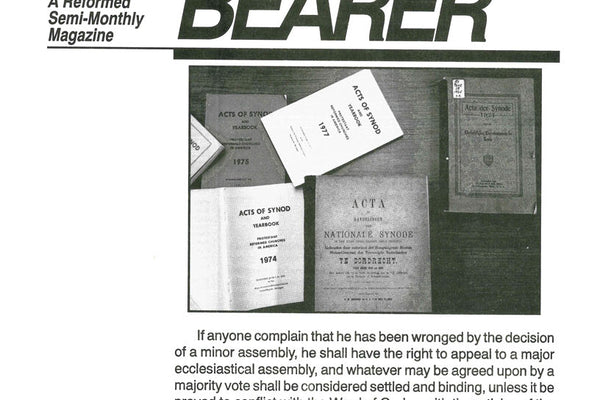
It cannot be said that Protestant Reformed people are wrapped up in the annual meeting of synod. Unless there is a case of special interest to the churches, visitors at synod are few. Seldom is the church building packed at the worship service with which synod begins. It is doubtful that the members wait with bated breath for the decisions of synod in the Acts.

Nevertheless, it lives in the congregations that synod is an important part of our church life. There is understanding that synod settles matters of dispute in the churches. The churches carry out the decisions of synod that bear on the denominational life. Consistories and individuals submit to decisions of synod with which they themselves are in disagreement. It is accepted that synod’s decisions will be considered settled and binding by all the consistories and by all the members.

This is as it should be. This is healthy. This is Reformed. The broader assembly of the churches, synod now in particular, is the necessary expression of the unity of the church of Christ. In keeping with the purpose of the unity of the church, synod serves for the mutual help of the congregations and represents the cooperative labor of all the churches of the denomination on behalf of Christ their common Head.

Reformed Church Order: Law of Christ

Reformed Church Order: Law of Christ

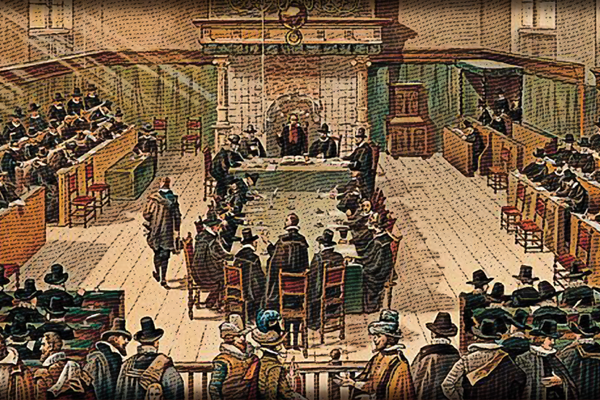
The life and labor of the Protestant Reformed Churches are regulated by a church order. This is the church order adopted for Reformed churches by the Synod of Dordt, 1618-19.

The church order is law for the churches. It is the authoritative standard to which both consistories and church members must conform. There are sanctions for the unruly and disobedient. The member who handles sin in the congregation by broadcasting it from the housetop, or over the telephone, rather than following the way prescribed in Articles 71-74 of the church order, will himself be disciplined. The minister who publicly agitates against the decision of his consistory will be censured for schism. The elder who is “captious and . . . vehement in speaking” at classis will be silenced and, if need require, disciplined by the president of the assembly. The consistory that refuses to submit to a decision of synod will be set outside the union of the churches of Christ.

January 15, 2021 Standard Bearer preview article

January 15, 2021 Standard Bearer preview article

Lessons from the Judges (2): From 32,000 to 300

The book of Judges brims with instruction for the church’s youth. Last time, we noticed the idea, “…every man did that which was right in his own eyes” (Judges 17:6). With this article, we continue drawing lessons from the book of Judges.

We find ourselves in the history of Gideon, following the deaths of judges Shamgar, Deborah, and Barak. Israel had again apostatized. As was repeatedly the case, God’s people slid into the sin of idolatry. Jehovah, in chastisement, sent the Midianites, Amalekites, and children of the East to oppress Israel. It is in this context that God called and equipped Gideon as judge. The Midianites and their allies gathered to fight against Israel. Gideon and certain of Israel—much fewer in number than their opponent—also assembled for battle. Although Israel’s army was small to begin with, Jehovah reduced its size even more before delivering the Midianites into Gideon’s hand. We will draw out two main lessons from this size reduction.

Christmas Joy

Christmas Joy

And the angel said unto them, Fear not: for, behold, I bring you good tidings of great joy, which shall be to all people. Luke 2:10

Fear not!

Tidings of great joy, indeed, I bring!

Was it Gabriel, the angel that standeth before God, who so suddenly burst forth in the darkness of the night from heaven’s star-studded canopy, and appeared upon the peaceful scene of the shepherds keeping watch over their flock?

We know not.

But the shepherds, we know, instead of expecting a message of gladness and salvation, instead of rejoicing at the appearance of one of the heavenly spirits that are sent for the service of the elect, were filled with dismay. A great fear filled their hearts. They were sore afraid. The sudden appearance of the heavenly messenger wrought within them a dreadful apprehension of some great evil impending.

They feared with a great fear. Generally it was believed by the people that when one saw an angel it meant death for him, a belief that may be regarded as scarcely more than a popular superstition. But here was more than the mere fear of death. It was the fear which sinful mortals experience when they are brought face to face with the glory of the Most High.

December 15, 2020 Standard Bearer preview article

December 15, 2020 Standard Bearer preview article

Good tidings of great joy

And the angel said unto them, Fear not: for, behold, I bring you good tidings of great joy, which shall be to all people. For unto you is born this day in the city of David a Saviour, which is Christ the Lord. Luke 2:10–11

Good tidings of great joy!

The world looks for joy in possessions and pleasures and power and whatever else they set their hearts on. Their idols promise happiness; but they never deliver. And when one’s idols prove themselves empty—as idols invariably do—they are replaced with other idols equally unable to satisfy.

In contrast to the empty joy of the world, there is great joy for all who know salvation in Christ the Lord. The shepherds experienced that joy some two thousand years ago.

Angels

Angels

Angels are mentioned in thirty-six of the sixty-six books of the Bible. The Hebrew and Greek words both mean messenger; they are means by whom God reveals himself and his salvation to us. Indeed, angels are the servants of the elect, “sent forth to minister for those who shall be the heirs of salvation” (Heb. 1:14). Angels are invisible, non-corporeal creatures who owe their existence to God. “He also created the angels good, to be his messengers and to serve the elect” (Belgic Confession, art. 12). Although the Bible does not inform us of the exact time of their creation, some theologians assign the creation of angels to the first day of the week, finding their support in Job 38:4, 7:“Where wast thou when I laid the foundations of the earth? . . . When the morning stars sang together, and all the sons of God shouted for joy?”