Candace, Queen of Ethiopia

Candace, Queen of Ethiopia

There are not many records about Candace Amantitere, but we can learn a lot about her rule in Meroe by what the Bible tells us about the Ethiopian eunuch himself (probably her Minister of Finance: “he had the charge of all her treasure,” Acts 8:27). Let’s think about what the eunuch had just been doing when he appears on the scene in Acts. He had completed a 1500-mile journey north, in a chariot, to Jerusalem, to observe a Jewish holiday at the temple. Now, why would he have done that?

Assyria (3): Nineveh

Assyria (3): Nineveh

Located on the east bank of the Tigris River in northern Iraq, Mosul has a population of about 1.8 million. But what connects Mosul to us as we study biblical history is what’s located on the other side of the Tigris River. In the middle of the urban sprawl of Mosul, west of the Tigris, and underneath dusty roads and forgotten fields, lie the ruins of that great city, Nineveh.

Assyria (2): The Kings

Assyria (2): The Kings

Today, we will zoom our lens in quite a bit closer and concentrate on the third stage of Assyria's history, known as the Neo-Assyrian Empire. This period begins in 912 B.C. and ends with the empire's demise in 609 B.C. We know the most about this era because this period coincides with the history of Judah and Israel given in the books of Kings and Chronicles. Let’s look at the Assyrian kings who played a prominent role in this Bible history.

Assyria (1): History

Assyria (1): History

If given a list of ancient world empires, you probably know enough information about some of them to impress your friends. You most likely have some knowledge of Babylon or Rome. Maybe even Persia or Greece. But what about the world power that existed before the ones just mentioned, which, at its height around 650 B.C., was the largest empire the world had ever seen? What do you know about Assyria?

Joppa

Joppa

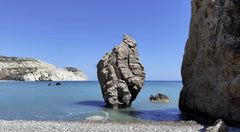
Israel has about 125 miles of coastline along the Mediterranean Sea. However, ancient Israel did not view this stretch of land in the same way the modern beach-goer does. Back then, the Mediterranean Sea meant chaos, rocky shores, and angry waves. It was a place where rumors of scary weather events came to life, and a place from which an enemy might attack. It’s no wonder that in Revelation 21, as John introduces us to the new heavens and new earth, the first example he uses to describe this magnificent future isn’t an end to the persecuting and oppressive Roman government of the day, a vanishing of sickness and disease, or even the abolishment of death. Instead, he makes this astounding statement: “And there was no more sea.”

Patmos: John’s Exile

Patmos: John’s Exile

Because of the emperor’s decree, Christians in Ephesus faced a life-or-death decision: remain faithful to God or worship the emperor at his temple. Because many Christians would not bow down to the emperor, the apostle John, being the Bishop of Ephesus at this time, received the most blame. Accusing John of political defiance and subversiveness, Domitian punished him with banishment to the island of Patmos in 95 A.D.