Thankfulness

Thankfulness

Our communion form delineates the walk of gratitude of the Christian as the laying aside unfeignedly of all enmity, hatred, and envy and a firm resolution to walk in true love and peace with the neighbor. Such conduct evidences true thankfulness to God because it is only the regenerated child of God who can and will do these things and in the practice of them he is deeply conscious that "by the grace of God I am what I am and his grace which was bestowed upon me was not in vain" (1 Cor. 15:10). Human nature cannot and will not submit to God's ordinance of love for "the carnal mind is enmity against God; for it is not subject to the law of God, neither indeed can be" (Rom. 8:7). All the works of the flesh are characterized by "enmity, hatred, and envy", the very things which the child of God strives by grace to put off. Thankfulness, which is the fruit of regeneration, springs to manifestation in a life of uprightness before God. 

The essence of that life is love and in the concrete manifestation of the love of God in our walk therefore lies the proof that we are born of God and are made partakers of his communion and that of his saints. In the living experience of that love lies the conscious enjoyment of all the blessings of salvation while the absence of that love creates total spiritual vacuum in the consciousness of man. 

It is not particularly striking then that the word of God in countless places emphasizes the importance of love in the conversation of the saints. Jesus tells us that it constitutes the core of the entire law of God in that well known summary: "Thou shalt love the Lord thy God with all thy heart, with all thy soul, and with all thy mind, and with all thy strength. This is the first and the great commandment; and the second is like unto it, Thou shalt love thy neighbor as thy self. On these two commandments hang all the law and the prophets” (Matt. 22:37–40).

Gone to Prepare a Place

Gone to Prepare a Place


"In my Father's house are many mansions: if it were not so, I would have told you. I go to prepare a place for you. And if I go and prepare a place for you, I will come again and receive you unto myself; that where I am there ye may be also." John 14:2, 3

Saying good-bye is always hard. 

That's especially true for those who love each other. 

It's part of dying, it's separation. 

The bleakness of such a moment is felt when you leave loved ones behind and move away. A congregation and minister encounter that pain when it's time for farewell. Parents stand helplessly silent as their son boards the plane for battle. The tension is most acute at the bedside of our dying loved ones. 

It's hard to say goodbye. We desire the presence of the person whom we love. We're afraid that we may never see them on earth again. 

Our text could be called a lover's farewell. 

Jesus was saying goodbye to his bride. That little band of eleven represented his church. Since he knew the pains of farewell, Jesus also knew that only one promise would console her, "I go…I will come again." To make certain that she understood, he sent angels at the triumphant moment of his ascension to re-affirm his promise, "This same Jesus, which is taken up from you into heaven, shall so come in like manner as ye have seen him go into heaven." 

The Bridegroom was saying goodbye to his bride. 

He was about to leave her to get everything ready for the wedding. 

The Ark's Return from Philistia

The Ark's Return from Philistia

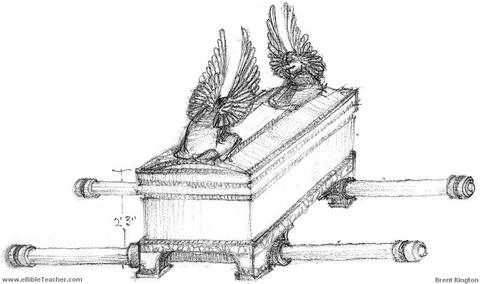
And the men did so; and took two milch kine, and tied them to the cart, and shut up their calves at home: And they laid the ark of the LORD upon the cart, and the coffer with the mice of gold and the images of their emerods, And the kine took the straight way to the way of Bethshemesh, and went along the highway, lowing as they went, and turned not aside to the right hand or to the left; and the lords of the Philistines went after them unto the border of Bethshemesh. 1 Samuel 6:10-12

For seven months the ark of Israel's God had been in the land of the Philistines, and there was no longer any question with the Philistines that he was not under their power but that they were under his. The God of Israel had smitten them with the pestilence much in the same way he had smitten the Egyptians many years before. Everyone was covered with boils, open, sore and draining; many had died. It happened wherever the ark was brought, whether Ashdod, Gath or Ekron. No one could escape it. With swift destruction the hand of the God of Israel descended upon them. No incantation could drive it away. No form of medicine was able to heal. The invasion of mice which had gone before seemed bad at the time; but this was far worse. The damage done to Dagon in his temple was now all but forgotten because of the suffering that filled the land. The people cowered in fear. 

At last the priests and diviners, the wise men of the Philistines, were called together to do something to save the nation. There was no longer any question what the trouble was. Everyone knew and took it for granted, as much as they disliked the thought. The ark of Israel's God had proved to be for them, not a great victory as they had first expected, but their curse. The only question for these learned men was, "What shall we do to the ark of the Lord? tell us wherewith we shall send it to his place." The ark of Jehovah had to be sent away. The only thing they feared was that they might not do it in the right way so that still greater judgments might descend upon them. 

The Church and the Sacraments (Early Views of the Church)

The Church and the Sacraments (Early Views of the Church)

Continuing with the early views of the organiza­tion of the church as entertained by the early church fathers, we now call attention to Irenaeus. In our preceding article we called attention to the views as expressed by Ignatius, one of the apostolic fathers and bishop of the church at Antioch. The great esteem in which he held the office of bishop appears from all his writings, although we also called attention to the fact that Ignatius also held the office of the presbyter or elder in high regard. Later the office of bishop was held in much higher esteem.

Irenaeus is reputed to have been the first to have advocated the institution of bishop as a diocesan of­fice and as the continuation of the apostolate. From him we quote the following quotation:

It is within the power of all, therefore, in every church, who may wish to see the truth, to contemplate clearly the tra­dition of the apostles manifested throughout the whole world; and we are in a position to reckon up those who were by the apostles instituted bishops in the churches, and to demonstrate the succession of these men to our own times; those who neither taught nor knew of anything like what these heretics rave about. For if the apostles had known hidden mysteries, which they were in the habit of imparting to the “perfect” apart and privily from the rest, they would have de­livered them especially to those to whom they were committing the churches themselves. 

Remember Me!

Remember Me!

“And he said unto Jesus, Lord, remember me when thou comest into thy kingdom.” Luke 23:42

Everyone mocked the Christ when he hung on the cross.

The people stood beholding.

The rulers derided him, but also with them, that is, the people.

The soldiers mocked him.

Even the written word meant to deride him. The superscription on the cross was meant as a taunt of the ruler, the governor: This is the King of the Jews! Imagine: a King on a cross??!!

Yes, and even a man who was in the same judg­ment with Jesus mocked him, saying, If thou be the Christ, save thyself and us!

Everyone derided and mocked Jesus.

But wait! There is one solitary exception: the other murderer.

He turns his tortured body toward the other mur­derer and after chiding him for mocking Jesus, he turns to Jesus and says: Lord, remember me when thou comest into thy kingdom!

Marvel of marvels!

There is one in the whole universe that believes in the crucified one!

And he is a murderer.

August 2019 Standard Bearer preview article

“As to our good works” (2): The nature of good works as works

Works occupy a prominent place in Scripture; in fact, Scripture is from beginning to end a book of works. Scripture attributes works to the triune God, Christ, angels—wicked and holy, and men—wicked and holy. We begin our examination of the good works of the believer by considering the nature of good works and noting five general characteristics of our good works as works.

A conscious, acting subject

First, works are those deeds consciously and volitionally performed by rational, moral beings. Strictly speaking, a creature like the sky is not capable of performing works. Psalm 19:1 teaches, “The heavens declare the glory of God; and the firmament sheweth his handywork.” The visible expanse of the heavens above us gives glory to God; however, it is not an intelligent creature consciously and willingly producing “works” of praise unto God as holy men and holy angels can do. We men are different than the creatures in the heavens above and in the earth beneath and in the waters under the earth, for God created us as personal beings with an intellect and will so that we are able to live consciously before His face performing works of service in love for Him and our neighbor. In marriage, a husband and wife are called to love each other and show it in word and deed, but if a whole week has gone by and they have not consciously performed even one considerate act towards each other, living as intimately as two stars twinkling side by side in the heavens, something is dreadfully amiss. God created us, and in Jesus Christ has recreated us, as new creatures able to do good. Consciously! Willingly! Cheerfully! Lovingly!