Your cart is empty now.


Faith: A Bond, a Gift, and an Activity (4): Salvation in Principle and in Reality
Is it not true that in a certain sense we are already saved when we are regenerated? While that is certainly true, we still must do justice to I John 5:1, which states, “Whosoever believeth [present tense] that Jesus is the Christ is born [has been born—perfect tense] of God.” In other words, the faith (believing) occurs after regeneration or is the fruit of regeneration (Canons 3-4, 12 refers to it as the “consequence” of regeneration). Similar is the testimony of John 1:12-13: “As many as received him [the activity of faith], to them gave he power to become the sons of God [adoption, which is an aspect of justification], even to them that believe on his name [faith], which were born… of God [regeneration].” Therefore, regeneration occurs before faith, that is, the activity of faith.
Faith: A Bond, a Gift, and an Activity (3): "Can and Must Do"
What follows is from Martyn McGeown's article "Faith: A Bond, a Gift, and an Activity,...
Faith: A Bond, a Gift, and an Activity (2): Faith and Justification
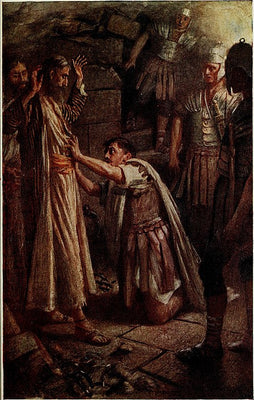
We should understand the jailor’s salvation in this way: Paul addressed the Philippian jailor with the command: “Believe in the Lord Jesus Christ and thou shalt be saved.” Paul did not say, “You are saved already because you are regenerate; therefore, do nothing.” He said, “Believe and thou shalt (in the future) be saved.” In other words, the jailor would enter into the enjoyment of the other benefits of salvation—justification, the forgiveness of sins, and, ultimately, heavenly glory—through faith in Jesus Christ. Without faith in Jesus Christ no man enjoys salvation, not even this panicking jailor. It is possible to possess salvation (to be regenerate, for example) without conscious faith, but it is not possible to possess the other benefits of salvation such as justification and sanctification, and to be consciously aware of them, and thus to enjoy and experience them, without faith (Rom. 5:1; I Pet. 1:22; Acts 26:18).

Faith: A Bond, a Gift, and an Activity (1)
What follows is from Martyn McGeown's article "Faith: A Bond, a Gift, and an Activity,...
Recent Posts